Who conducted the study?
A group of researchers from the Asa-Awuku Research Group at the University of Maryland’s Environmental Aerosol Lab.
Where did they do it?
The study was conducted in a controlled aerosol chamber at the University of Maryland’s Environmental Aerosol Lab. This small, enclosed chamber allowed researchers to control airflow and surface conditions while measuring how quickly e-cigarette aerosol cleared from the air.
What did they want to learn?
The researchers wanted to understand what happens to e-cigarette aerosol immediately after it is released indoors. They examined how quickly the particles disappear from the air and whether ventilation or indoor surfaces affect how long the aerosol remains present.
How did they perform the study?
Researchers released a single controlled e-cigarette puff into a small, enclosed chamber. They then measured the number of airborne particles over time under different airflow and surface conditions. The experiments were repeated three times to compare how quickly the aerosol cleared from the air.
What did they find?
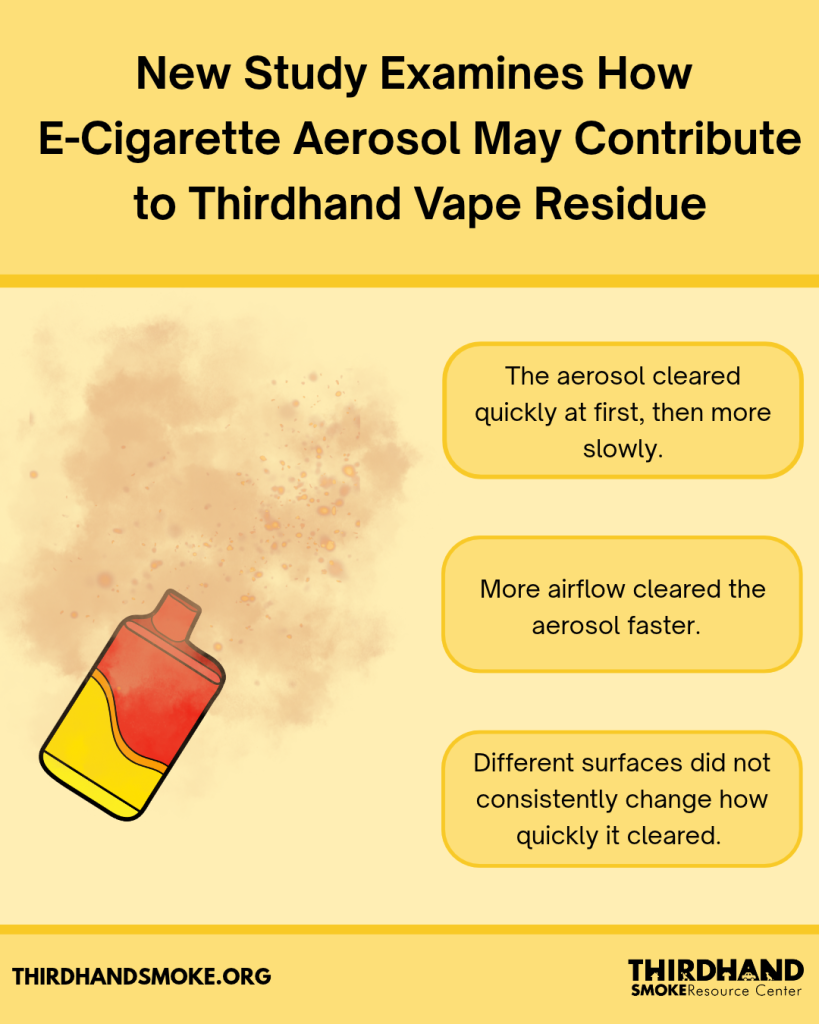
The researchers found that e-cigarette aerosol particle levels dropped quickly at first, followed by a slower decline. This slower phase meant that some particles remained in the air for longer after the puff. Increased airflow cleared the particles more quickly, while the tested surfaces did not consistently affect the particles’ decay patterns.
Why is this study important?
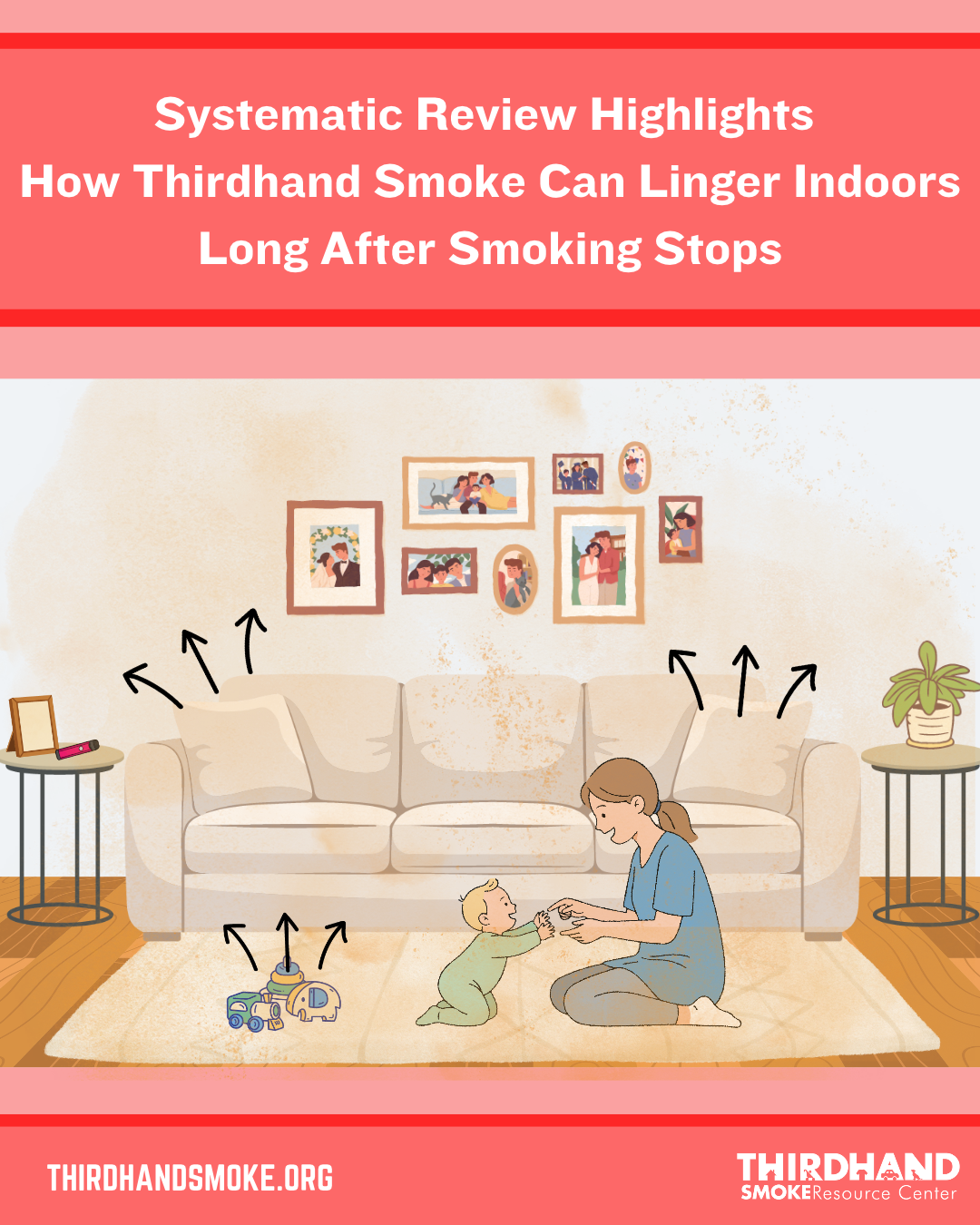
This study helps explain what happens indoors after vaping stops. It shows that e-cigarette aerosol may not disappear immediately and that some particles can remain involved in slower air- and surface-related processes. These findings provide a foundation for understanding how vaping may contribute to thirdhand vape residue and continued indoor exposure, although the study did not directly measure chemical residue or health effects.
You can read the full study here.