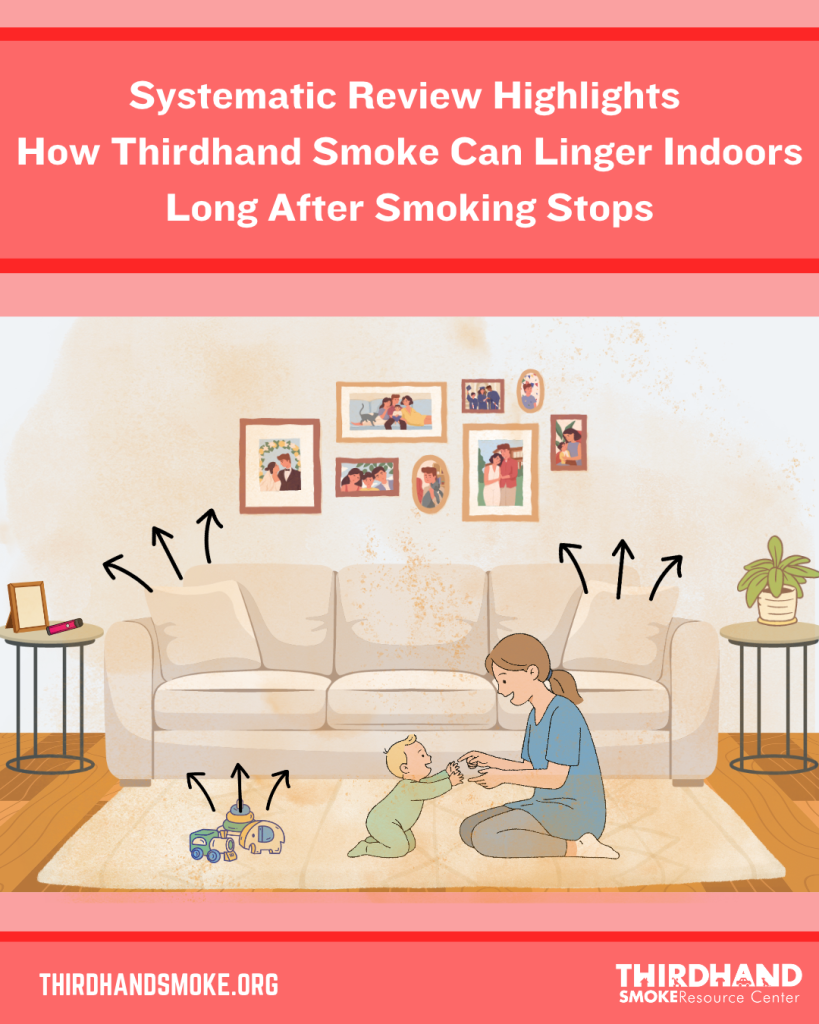
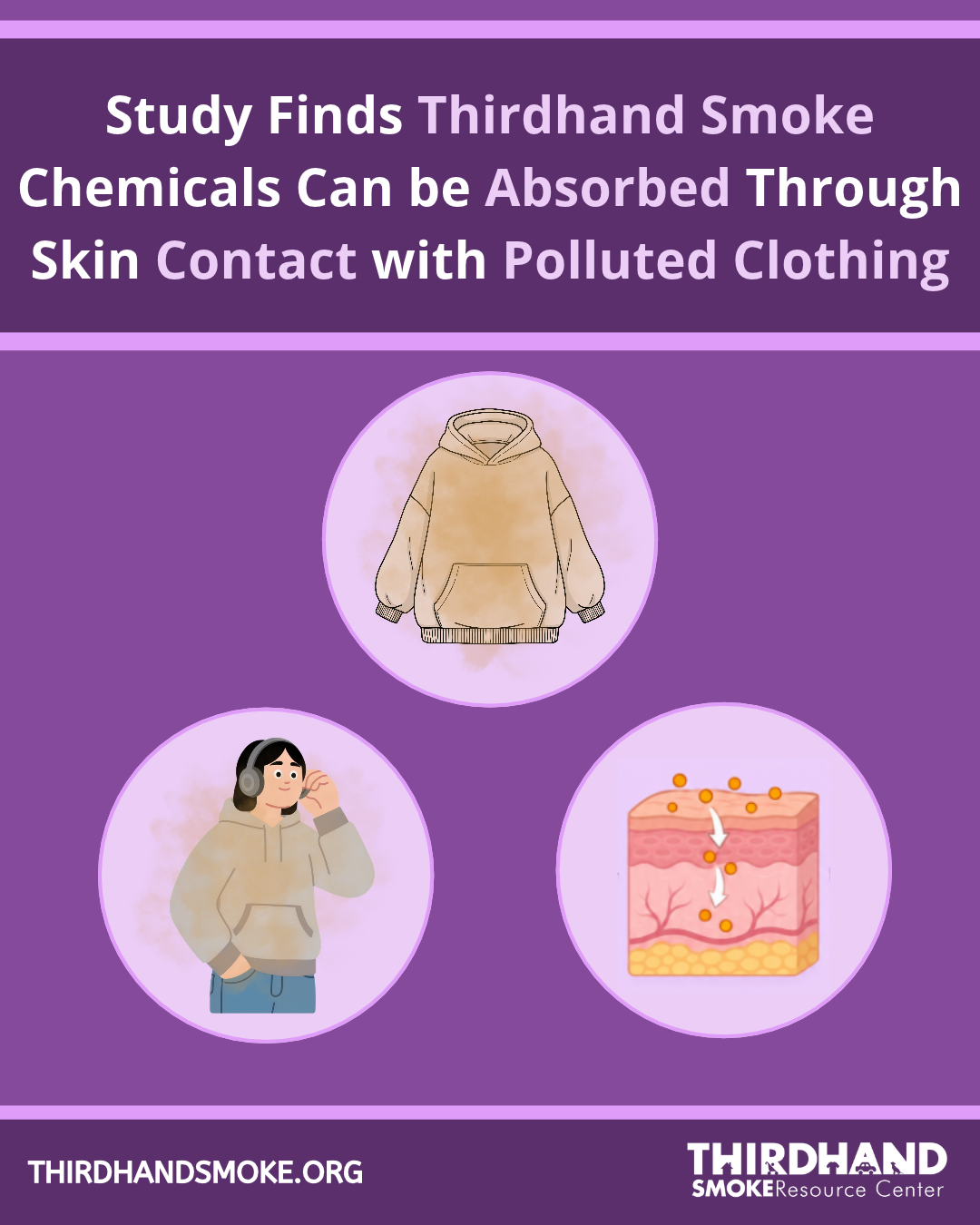
Thirdhand smoke is the toxic chemical residue left behind after smoking stops. It can settle on indoor surfaces, become embedded in materials such as upholstery and flooring, and accumulate in dust. Unlike secondhand smoke, thirdhand smoke can persist indoors long after smoking has stopped.
A recent systematic review published in American Chemical Society Environmental Science & Technology Air summarized research on the persistence, movement, chemical transformation, and potential effects of thirdhand tobacco smoke in indoor environments. The review, conducted by Yunfei Jia and Dr. Jenna C. Ditto of Washington University in St. Louis, synthesized findings from studies conducted in settings including homes, hotels, and vehicles.
“One of our key goals with this review was to build on the significant advances in thirdhand smoke research that have been made over the last several decades,” Dr. Ditto explained. The authors integrated findings across different environmental settings, sample types, and exposure pathways to better understand how thirdhand smoke persists, how it redistributes indoors, and may expose people.
The review found consistent evidence that thirdhand tobacco smoke is widespread and persistent. Studies detected thirdhand smoke chemicals in many nonsmoking environments, including spaces where smoking was prohibited. The residue can remain measurable for years after smoking has stopped or after people who smoke have moved out of a building.
“Thirdhand tobacco smoke can persist indoors long after smoking activity stops and can be transported into smokefree spaces by lots of vectors, such as clothing and airflow,” Jia said.
Once tobacco smoke residue enters an indoor environment, it can accumulate on surfaces and in dust. Its chemical components may also continue to change over time, potentially forming additional toxic compounds, including carcinogens.
“Indoor surfaces, such as upholstery, drywall, and flooring, provide sites for thirdhand smoke to accumulate and transform,” Jia said.
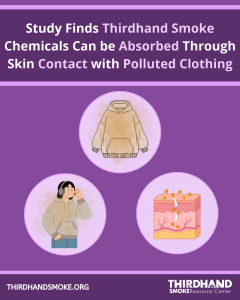
The review also found evidence that people may be exposed to thirdhand smoke through multiple pathways, including inhalation and skin contact. This may be especially important for children and people with health conditions who spend substantial time indoors as well as for families living in multi-unit housing, where smoke can move between units. However, the authors emphasized that more research is needed to understand the health effects of real-world thirdhand smoke exposure and to identify the most effective ways to remove contamination.
“To me, the standout conclusions involve the ubiquity and persistence of thirdhand tobacco smoke,” Dr. Ditto said. “We read many studies that detected thirdhand tobacco smoke in nonsmoking environments, emphasizing just how common these chemicals are indoors.”
This means that smoking may be prohibited in a space and still contain thirdhand smoke residue from past smoking activity or from tobacco smoke transported from another location. The authors also highlighted the challenges of removing contamination, noting that some remediation practices may not completely eliminate thirdhand smoke from indoor environments.
For parents, homeowners, and renters, the authors’ primary message is that preventing indoor smoking is the best way to limit thirdhand smoke contamination. Increasing ventilation and cleaning or vacuuming regularly may be practical steps, but these actions may not completely remove residue that is already present. In other words, preventing contamination is more effective than trying to remove thirdhand chemical residue after it has accumulated indoors.
“In my opinion, the best thing we can do is to avoid smoking indoors whenever possible,” Dr. Ditto said. “This includes tobacco cigarette smoking, but also smoking of any kind of product.”
The authors also emphasized the importance of comprehensive smokefree policies in multi-unit housing and lodging. When smoking is allowed in some areas of a building, tobacco smoke and residue may move between units and affect people living in otherwise smokefree spaces.
The review demonstrates that thirdhand smoke is not simply an odor that disappears when a cigarette is extinguished. It is a persistent indoor pollutant that can remain in the environment, move between spaces, and be difficult to remove.
“Ensuring that shared indoor spaces are completely smokefree whenever possible would provide the best protection for all building occupants,” Dr. Ditto said.
To read the full systematic review, click here.