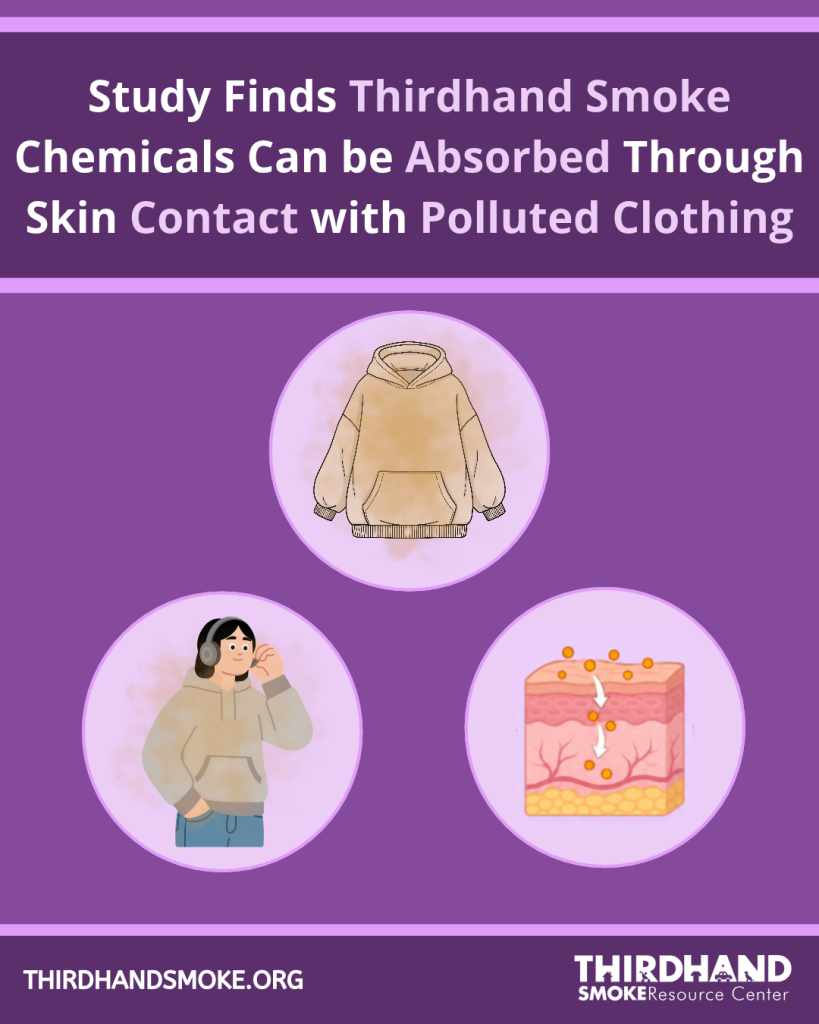
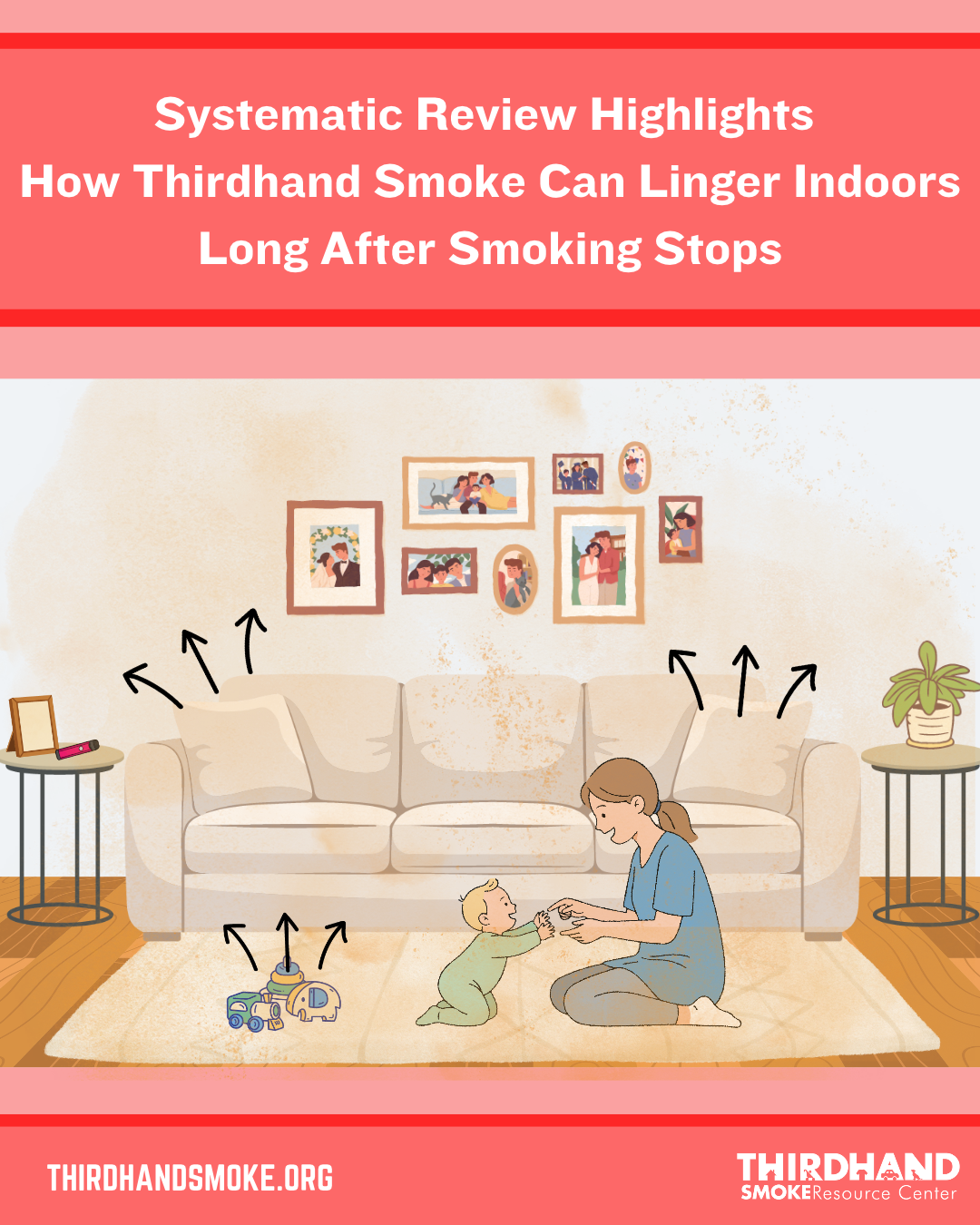
Thirdhand smoke is the toxic chemical residue left behind after smoking. It can settle on indoor surfaces, become embedded in materials such as furniture and bedding, and accumulate on clothing. It is well understood that nonsmokers can be exposed when they inhale thirdhand smoke chemicals as they off-gas from surfaces. Less is known about how chemicals from smoke-contaminated materials enter the body through the skin.
A recent controlled human exposure study published in Nicotine & Tobacco Research examined whether people can absorb nicotine and tobacco-specific nitrosamines through their skin after wearing clothing contaminated with thirdhand smoke residue. The study was led by Dr. Suzaynn Schick, a professor of medicine at the University of California, San Francisco, and included 21 healthy adults who did not regularly smoke or normally experience tobacco smoke exposure.
“Current data on the chemistry of thirdhand smoke shows that the bulk of it is stuck to surfaces, not in the air,” Dr. Schick explained. “Classically, with smoke, we are really looking at what is in the air. What are you inhaling if you’re smoking, what are you inhaling if someone is smoking near you, and thirdhand smoke has an airborne component, but a lot of it is what’s on surfaces, and thus, what are we able to absorb through our skin?”
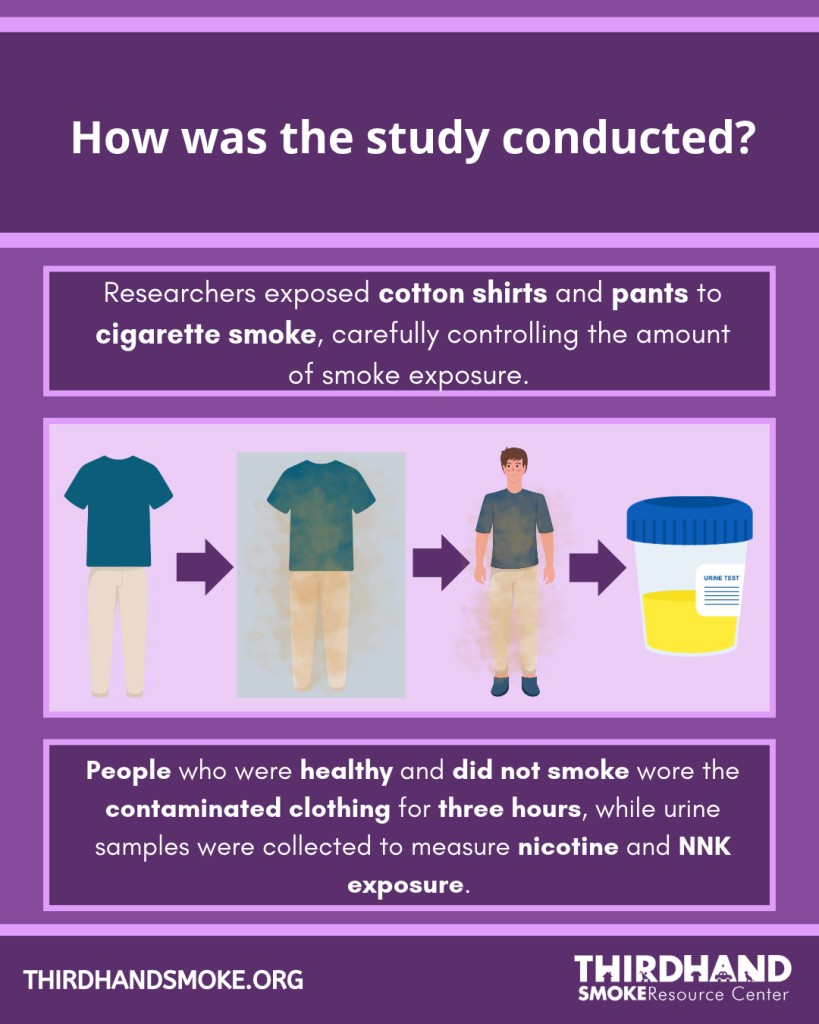
To conduct the study, researchers exposed cotton shirts and pants to cigarette smoke under controlled laboratory conditions. The exposure was designed to approximate the contamination clothing might experience in the home of someone who smokes regularly. During the exposure visit, participants wore the smoke-exposed clothing for three hours inside a chamber supplied with HEPA- and charcoal-filtered air. They wore clean clothing during a separate control visit. The filtered-air chamber helped minimize inhalation exposure while researchers assessed dermal uptake from the clothing.
The researchers collected urine samples before and after each visit to measure cotinine and 3-hydroxycotinine, metabolites of nicotine, as well as NNAL, a metabolite of the tobacco-specific carcinogen NNK.
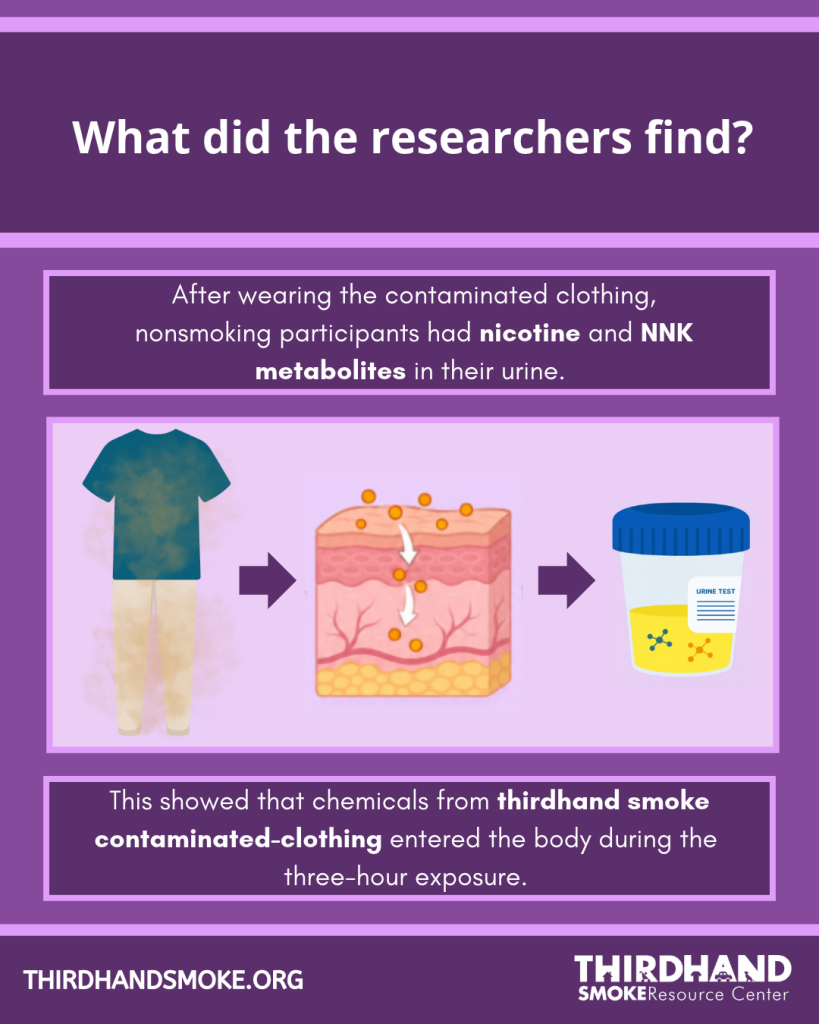
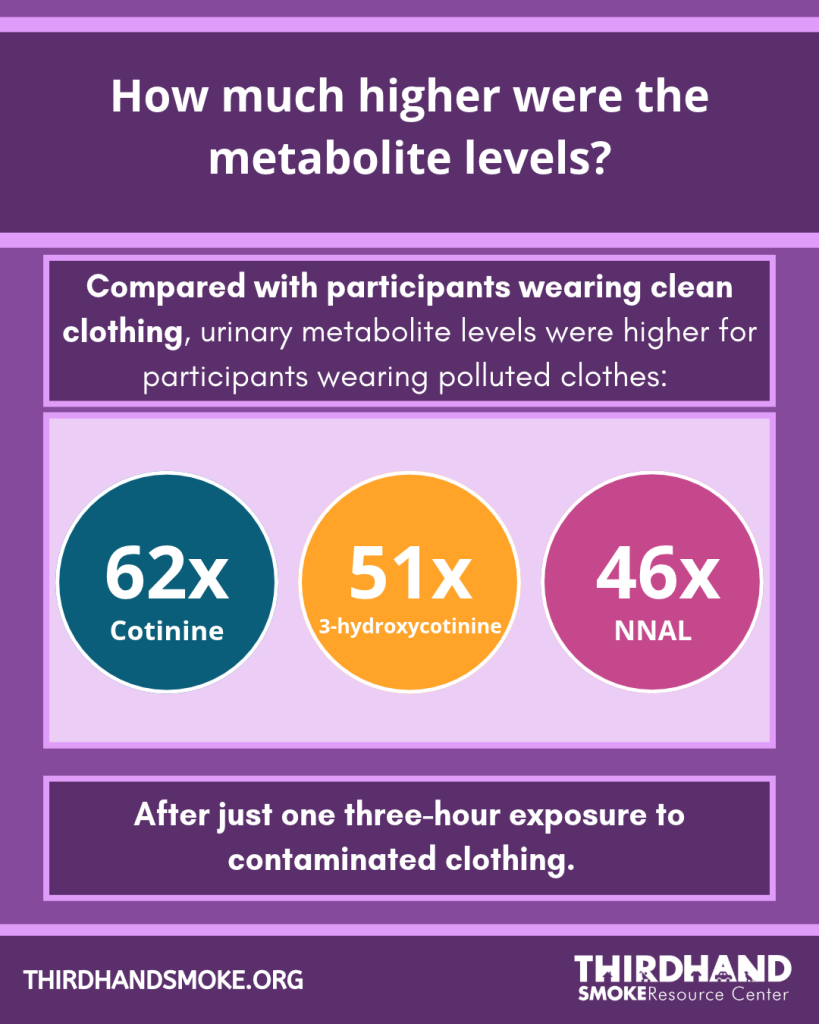
The results showed that wearing thirdhand smoke-contaminated clothing led to significant dermal uptake of nicotine and NNK, as reflected by increases in their urinary metabolites. Peak median cotinine concentrations were 62 times higher after participants wore contaminated clothing than after they wore clean clothing. Similarly, peak 3-hydroxycotinine concentrations were 51 times higher, and peak NNAL concentrations were 46 times higher.
The contaminated clothing contained approximately 30 to 35 milligrams of nicotine, comparable to the nicotine in one to two whole cigarettes. Although participants absorbed only a small fraction of the nicotine from the clothing, Dr. Schick noted that the amounts absorbed were surprisingly high.
“We were flat-out astonished by how much nicotine and NNK people absorbed,” she said. “When comparing it to other studies, it’s just a really high uptake.”
The study also provided the first controlled human evidence that NNK can be absorbed through the skin after contact with thirdhand smoke-contaminated clothing.
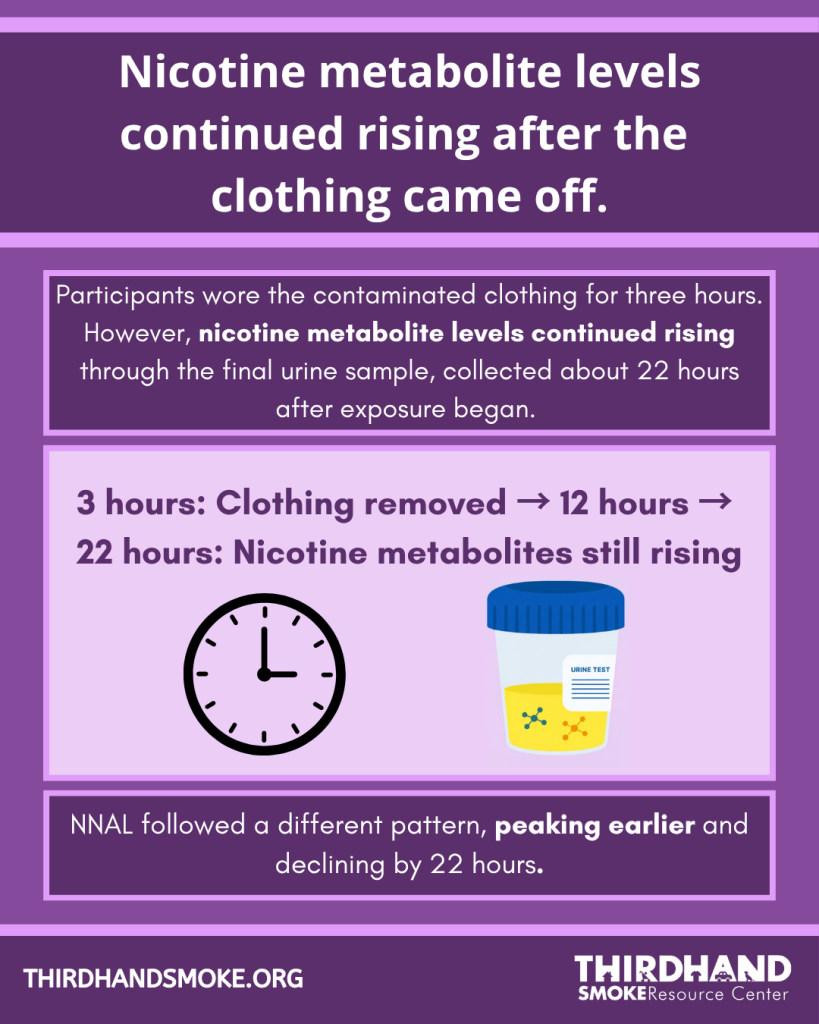
Another notable finding concerned the timing of exposure. In previous studies of inhalation of second- and thirdhand smoke, nicotine metabolite concentrations generally peaked sooner. In this study, nicotine metabolite concentrations continued to rise through the final urine sample, collected approximately 22 hours after exposure began.
Dr. Schick explained that this delayed response may be related to a “dermal reservoir,” in which nicotine is absorbed into the skin and released gradually into the bloodstream.
“The peak was very different from what we had seen in people breathing smoke,” Dr. Schick noted. “We saw a real difference between the nicotine metabolites and the NNK metabolites. The slowing of time to peak seemed to be specific to nicotine.”
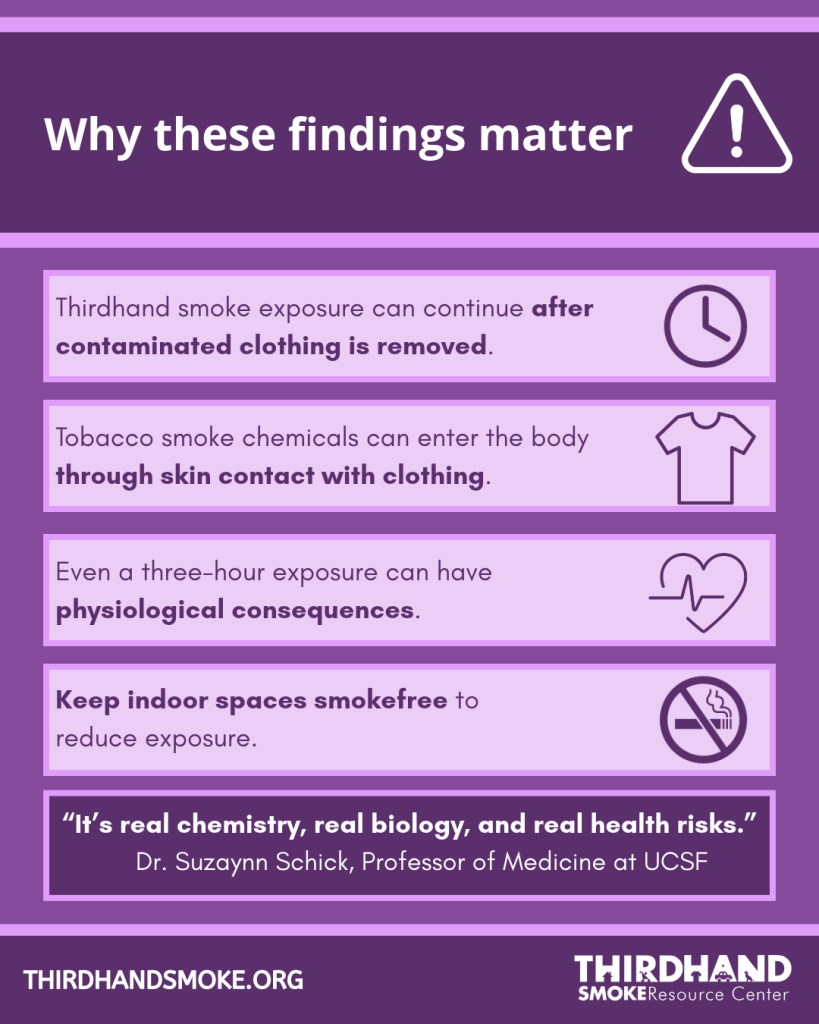
The findings suggest that exposure may continue even after a person removes contaminated clothing. Similar exposure may occur through contact with other indoor materials and surfaces where thirdhand smoke chemicals can accumulate and persist, including bedding, furniture, carpeting, dust, and vehicle interiors.
The study was conducted under controlled laboratory conditions, so more research is needed to understand everyday dermal exposure and the effects of long-term contact. However, Dr. Schick noted that the findings show that thirdhand smoke can linger in the body longer than expected and may affect anyone exposed to tobacco smoke residue, not only people who live with someone who smokes.
The findings may be especially relevant for children and could support smokefree housing policies, including California’s AB 455. As Dr. Schick emphasized, thirdhand smoke involves “real chemistry, real biology, and real health risks.”
Overall, the study demonstrates that thirdhand smoke is not merely an odor that dissipates after a cigarette is extinguished. Tobacco smoke chemicals can persist on clothing and indoor surfaces, be absorbed through the skin and remain in the body for many hours after exposure. As Dr. Schick explained, being informed about these risks can help people avoid exposing themselves, children, and medically vulnerable individuals when such exposure is preventable.
To read the full study, click here.